
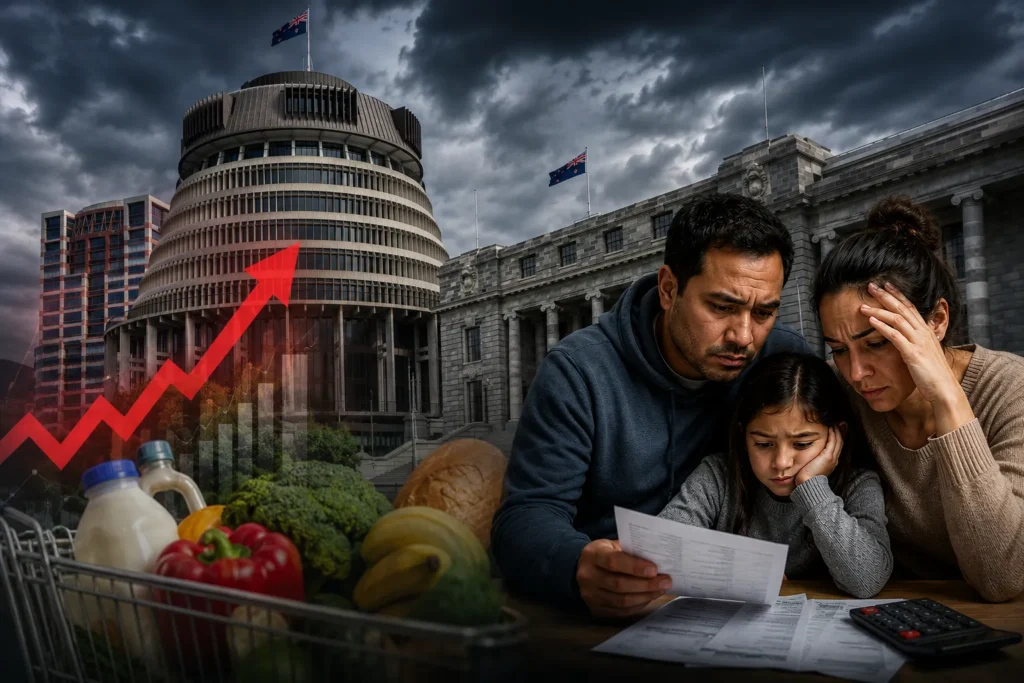
The cost of living continues to dominate political discussion across New Zealand as households face ongoing pressure from rising food prices, housing costs, and economic uncertainty.
Political leaders are increasingly focusing on inflation, wages, healthcare, and housing affordability as many New Zealanders continue adjusting to higher everyday expenses.
Recent economic data has shown that while inflation pressures have eased slightly compared with previous years, many families still report significant financial strain due to increased grocery prices, rent, fuel, and utility costs.
Housing affordability also remains one of the country’s biggest political issues, particularly in major cities including Auckland and Wellington.
Government officials say efforts are continuing to stabilize the economy and reduce pressure on households through economic reforms, infrastructure investment, and public service support. However, opposition parties argue stronger action is needed to address affordability concerns and improve economic confidence.
The issue is expected to remain a major focus across Parliament and national political debate throughout the year.
Business groups and economists continue closely monitoring New Zealand’s economic outlook as global uncertainty, interest rates, and international market conditions influence domestic financial conditions.
At the same time, public frustration surrounding healthcare wait times, infrastructure pressure, and public service funding has also contributed to growing political debate.
Analysts say voter confidence may increasingly depend on how effectively political leaders address economic concerns over the coming months.
For many New Zealand households, the cost of living remains one of the most important issues shaping public opinion and political discussion nationwide.



2 Responses
I’m blown away by the depth of coverage. https://traderzo.com/robotic-trading-complete-guide-to-automated-trading-robots/
This article is a goldmine of information. https://traderzo.com/